
Cheap Countries to Study Abroad: Your Practical Guide
Studying abroad is one of the best decisions you can make for your career and your worldview. But the cost puts off a lot of students before they even start looking. The good news is that some of the best education systems in the world are also among the most affordable. Here is a quick guide to countries worth seriously considering.
Germany 🇩🇪
Germany is probably the most well-known option for budget-conscious students. Most public universities charge no tuition at all, even for international students. You pay a small semester fee, usually between 150 and 350 euros, which sometimes even covers your public transport. TU Munich, Heidelberg University, and Freie Universitat Berlin are among the top choices. Most undergraduate programs are in German, so language prep matters, but there are hundreds of English-taught master's programs available.
Top universities: TU Munich, Heidelberg University, Freie Universität Berlin
Tip: Most undergraduate programs are in German, but graduate programs in English are abundant. Start your language prep early if going the undergraduate route.
Norway 🇳🇴
Norway follows a similar model. Public universities charge no tuition, and the quality of education is genuinely excellent. The living costs are on the higher side, but the Norwegian government runs scholarship schemes that are specifically open to students from developing countries and are often undersubscribed. University of Oslo and NTNU Trondheim are strong options across multiple disciplines.
Top universities: University of Oslo, NTNU Trondheim
Tip: Apply for the Lånekassen scholarship as an international student — it's underused and underknown.
Poland 🇵🇱
Poland is one of Europe's most underrated study destinations. Tuition typically runs between 2,000 and 4,000 dollars a year, and the cost of living is among the lowest on the continent. Warsaw and Krakow are vibrant student cities. The University of Warsaw and Jagiellonian University both have solid international reputations. The Polish National Agency for Academic Exchange, known as NAWA, offers grants specifically for non-EU students that are worth applying for.
Top universities: University of Warsaw, Jagiellonian University, Warsaw University of Technology
Tip: Apply through the NAWA (Polish National Agency for Academic Exchange) portal — they offer several grants specifically for non-EU students.
Malaysia 🇲🇾
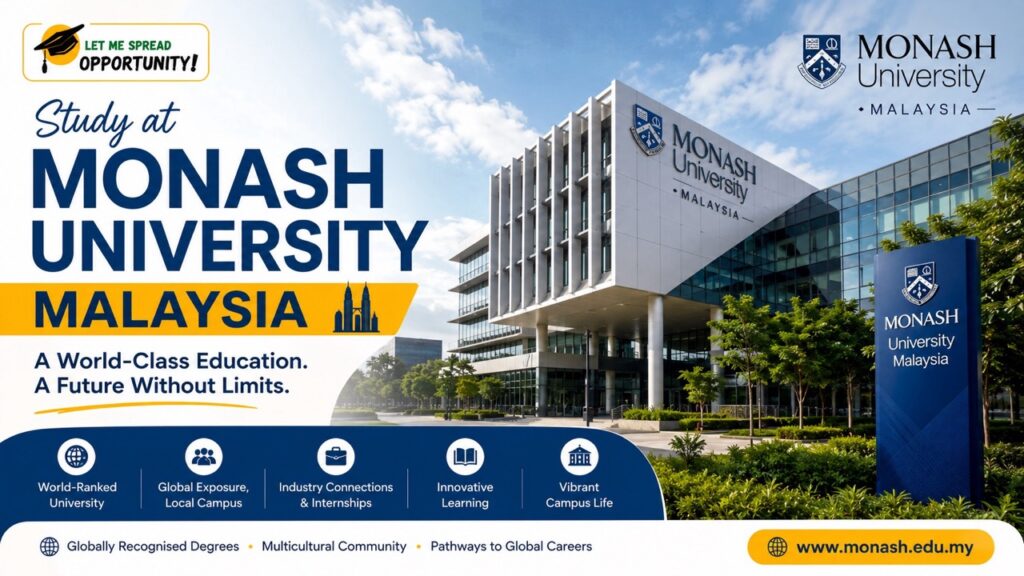
In Asia, Malaysia stands out as a genuinely affordable option. Tuition ranges from 3,000 to 6,000 dollars a year at reputable institutions, and monthly living costs can come in under 500 dollars. What makes Malaysia especially interesting is that several British and Australian universities run branch campuses there, so you can earn an internationally recognized degree at local prices. Monash Malaysia and Heriot-Watt Malaysia are popular choices.
Top universities: University of Malaya, Monash Malaysia, Heriot-Watt Malaysia
Tip: Branch campuses let you transfer to the home campus in your final year — a great hack for getting a UK/Australian degree on a budget.
India 🇮🇳
For students open to studying within the region, India offers strong programs in engineering, medicine, management, and the arts at very competitive rates, often between 1,500 and 5,000 dollars per year. The Study in India initiative by the government has made the application process more streamlined for international students, and scholarship options are available through the portal at studyinindia.gov.in.
Top universities: IITs (for tech), University of Delhi, Manipal Academy
Tip: Apply through the Study in India portal (studyinindia.gov.in) — it aggregates hundreds of programs and often includes scholarship options.
Tips to Help You Apply
Start early. International application deadlines often fall three to six months before the domestic ones, and missing them is a common mistake. Research bilateral scholarships between your country and your target destination because many of these go unclaimed every year. Even if your program is taught in English, picking up basic language skills in the local tongue will help enormously with daily life and housing. Finally, before you commit, always confirm that your degree will be recognized in the country where you plan to work after graduation.
The most rewarding study abroad experience does not have to be the most expensive one. Sometimes the destinations people overlook end up offering the most.